Takeaways
Introduction
In our project, we did 2 types of analysis: Circular Buffer Analysis and Network Analysis. Both analyses were insightful. However, we delved deeper into Network Analysis as it took into account of walkable roads and cycling paths, which could then provide more valuable insights.
Circular Buffer Analysis
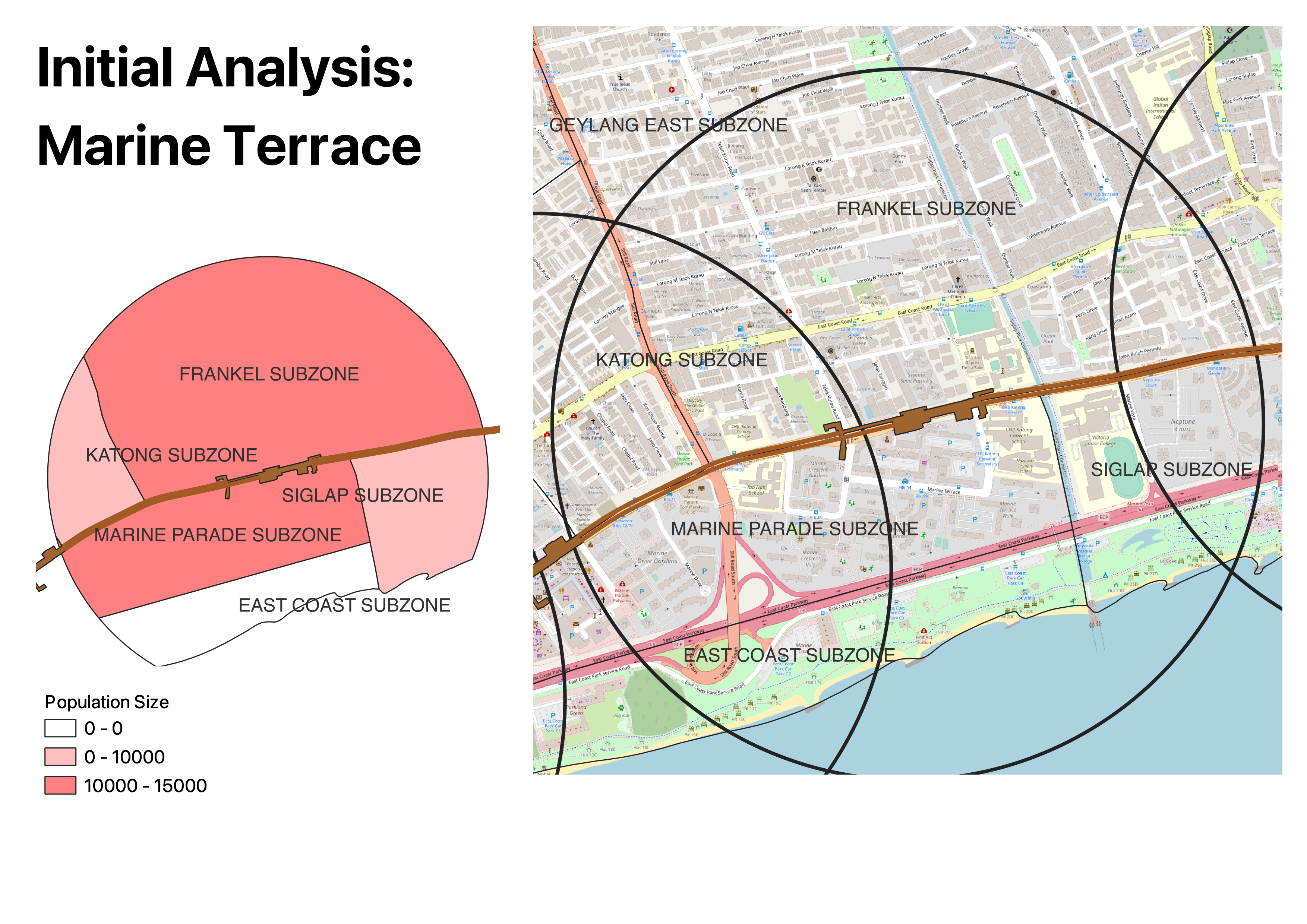
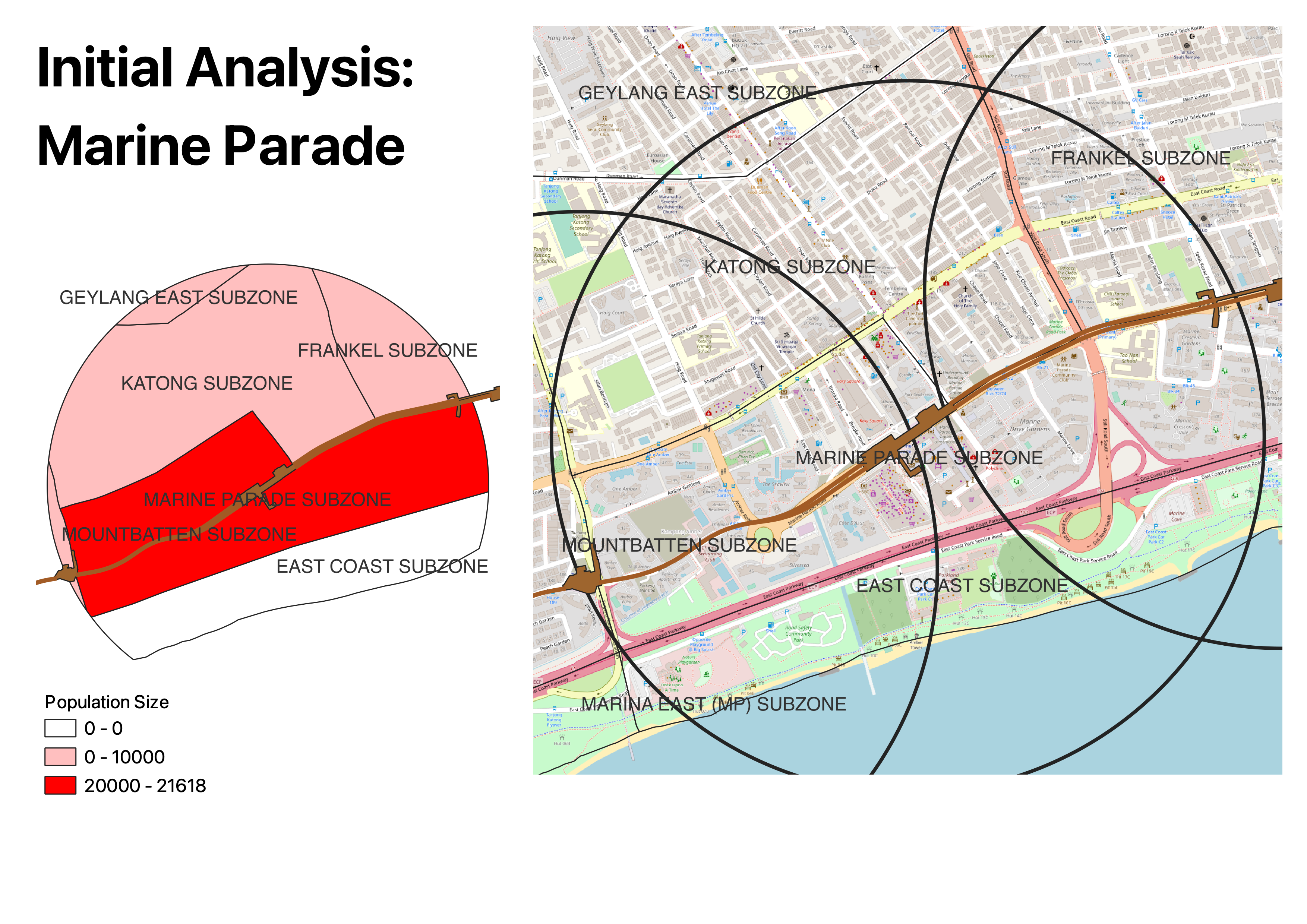
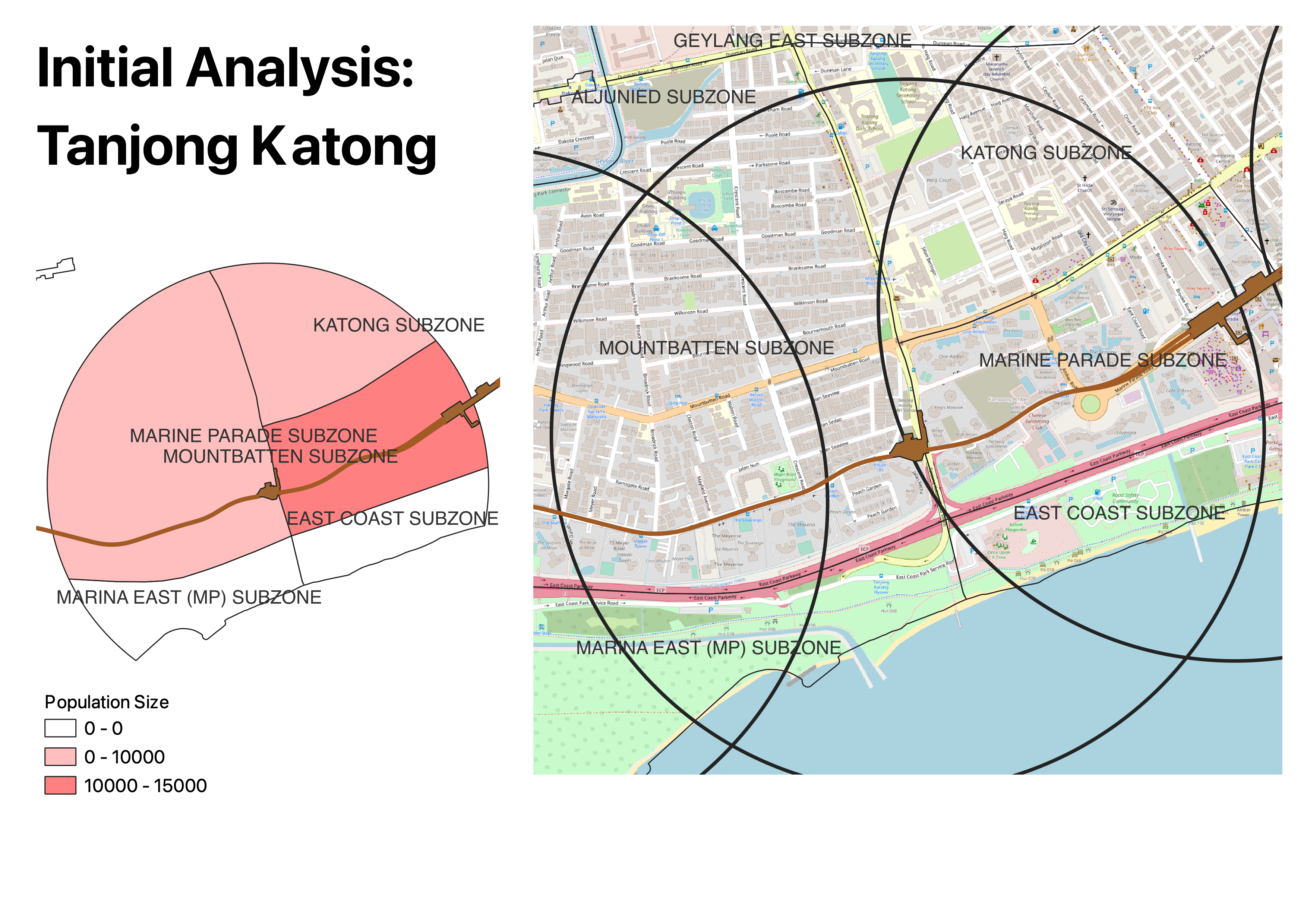
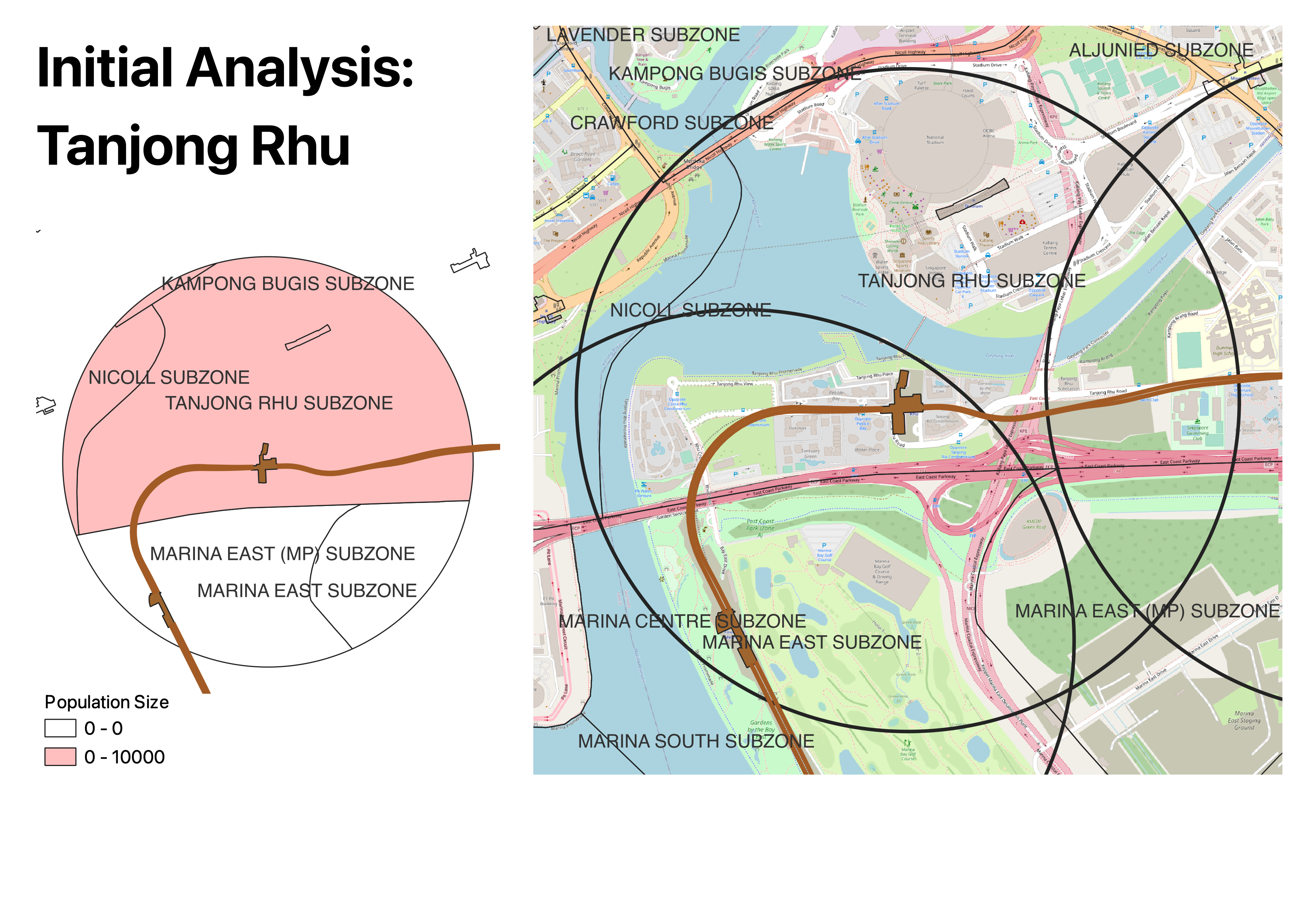
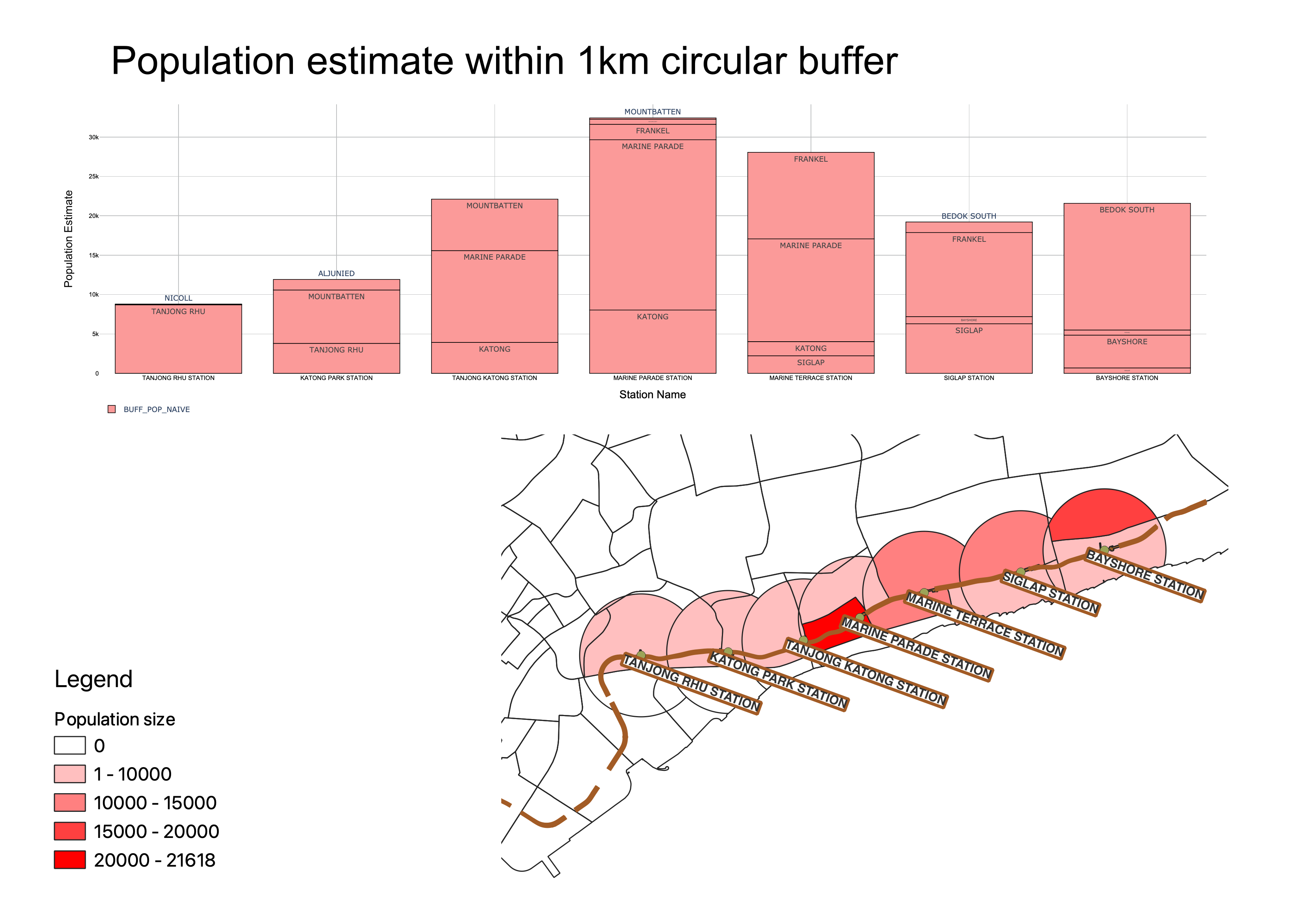
Although this is a naive method that does not take into account the network lines, we did gain a few insights from the 1 km buffer analysis.
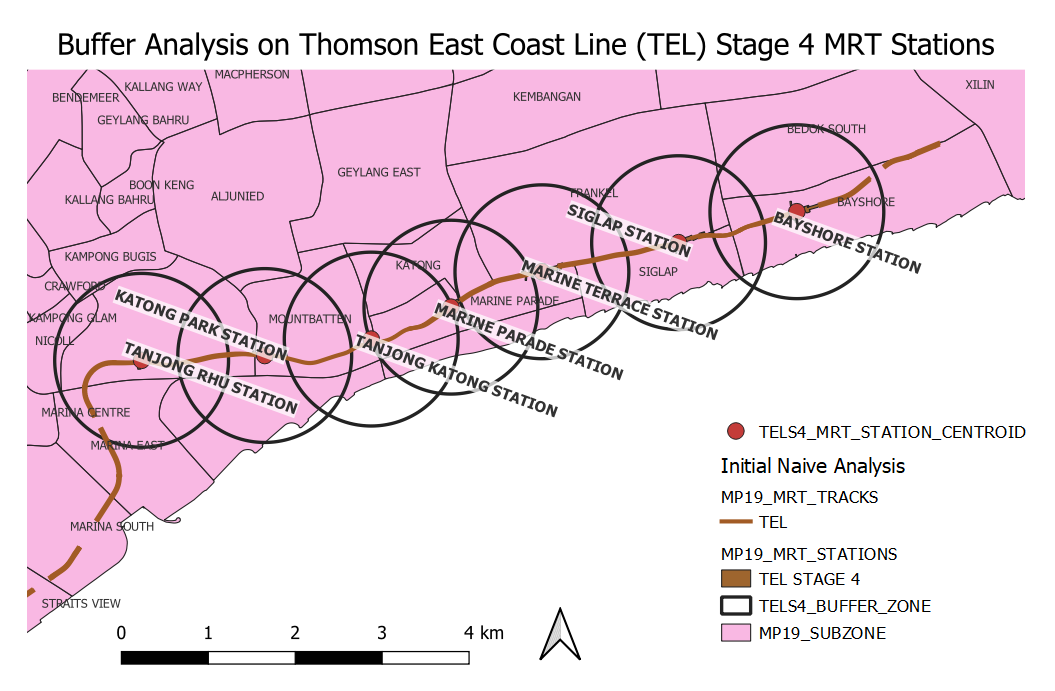
As shown above, the extent of overlap between the buffer zones is different across the TEL Stage 4 MRT stations. This also means that the MRT stations are not equidistant away from each other, with some closer than others. From our analysis, we have observed that the extent of overlap between Marine Parade station and Tanjong Katong station is the largest, followed by the overlap between Marine Parade station and Marine Terrace station.
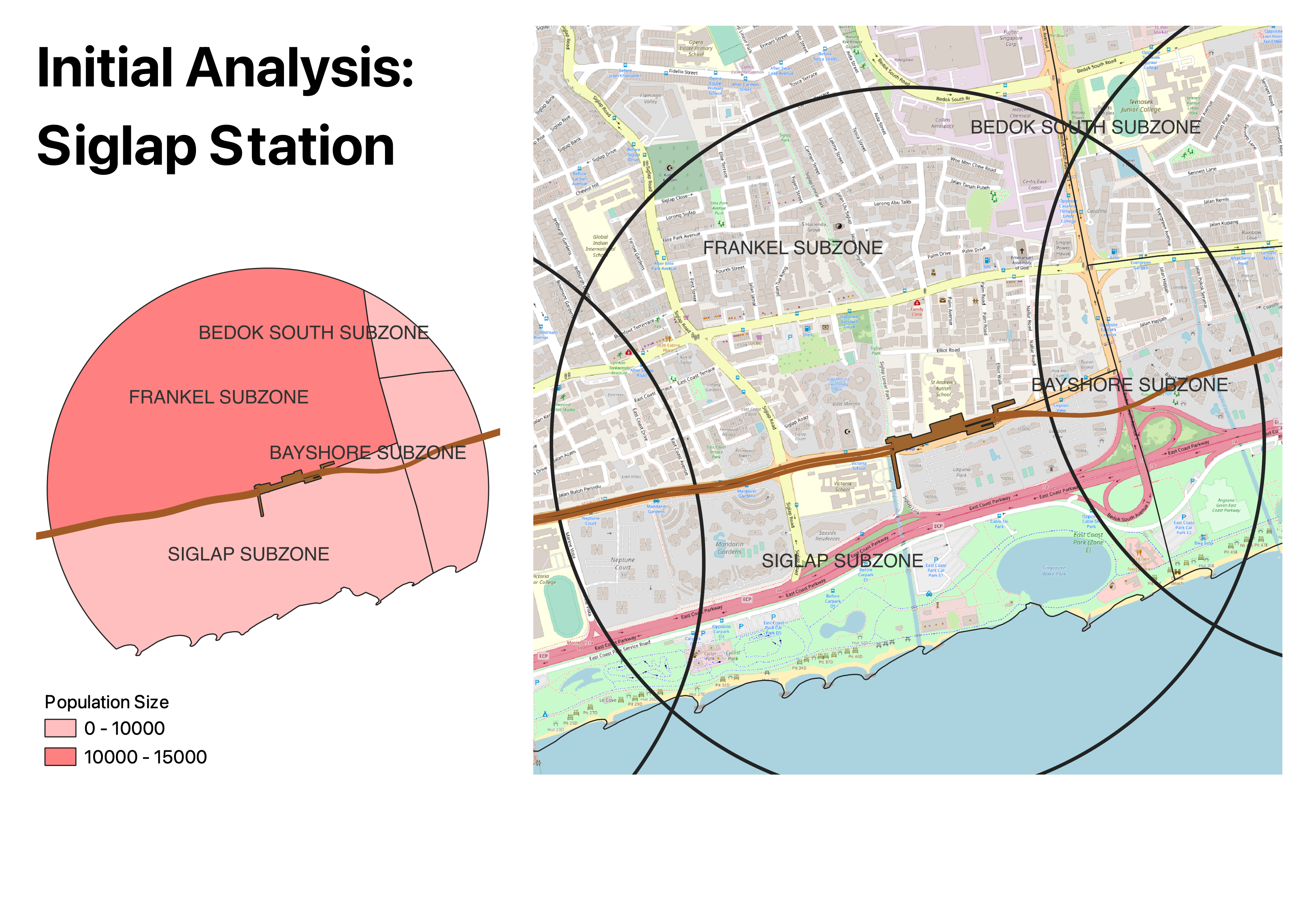
However, this does not contribute to poor geographical planning as different subzones have different population densities. Based on the map above, the below table comprises the subzones found within the buffer zones, with their respective population density. The list is arranged from highest to lowest population density.
| No. | Subzone | Population | Area | Density |
| 1 | Marine Parade | 26,880 | 1.160 km² | 23,172/km² |
| 2 | Bedok South | 46,690 | 2.997 km² | 15,577/km² |
| 3 | Katong | 9,360 | 1.079 km² | 8,675/km² |
| 4 | Frankel | 34,490 | 4.297 km² | 8,026/km² |
| 5 | Siglap | 6,440 | 1.086 km² | 5,928/km² |
| 6 | Mountbatten | 9,980 | 1.712 km² | 5,830/km² |
| 7 | Tanjong Rhu | 11,110 | 2.051 km² | 5,418/km² |
| 8 | Bayshore | 7,450 | 2.507 km² | 2,972/km² |
From the table, Marine Parade subzone is the most densely populated subzone. As such, it is beneficial to have Tanjong Katong and Marine Terrace stations in closer proximity to Marine Parade station to help distribute the demand for TEL stations and reduce human congestion.
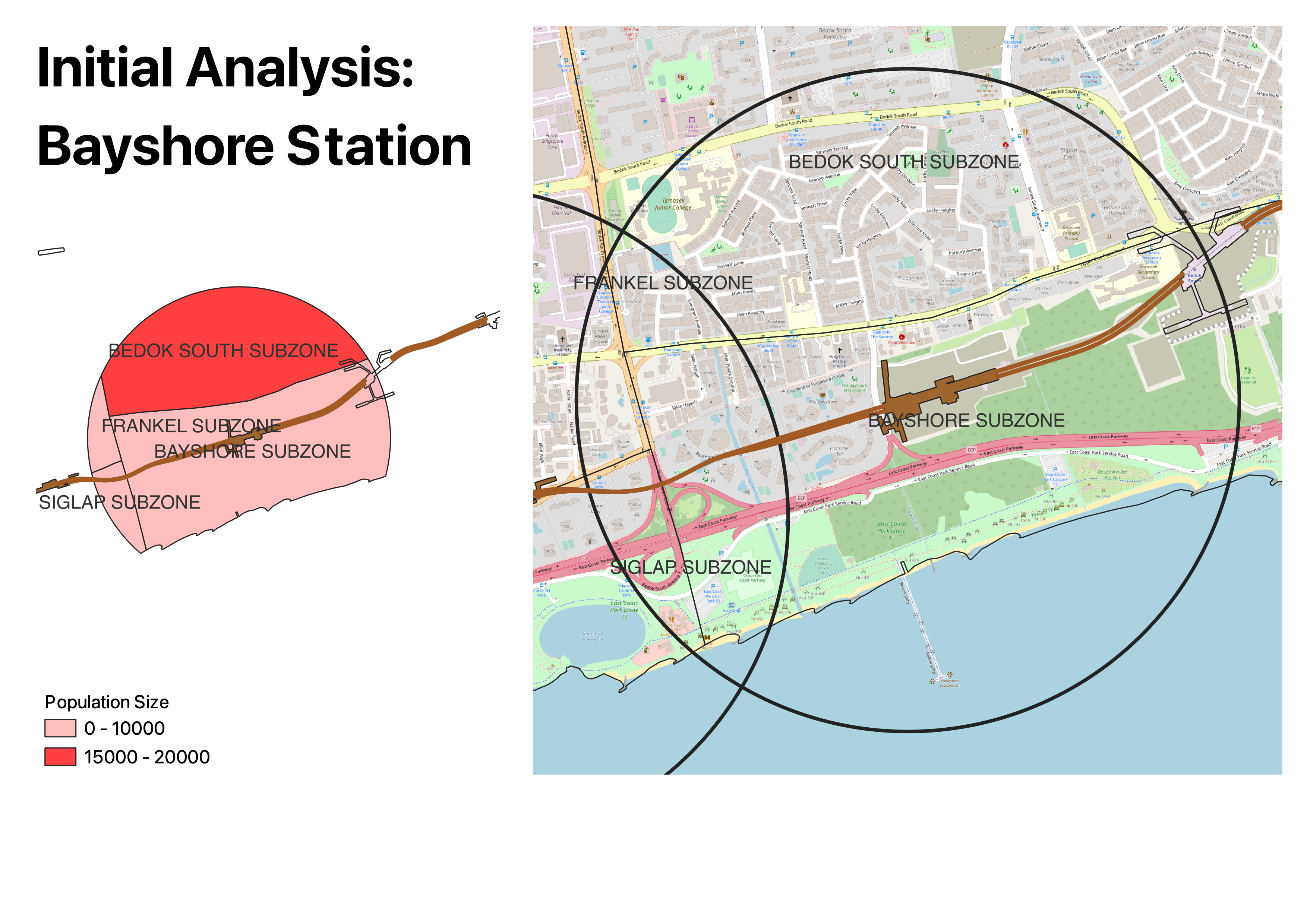
We also noticed that the Bedok South subzone is the second most densely populated area. As such, it is also practical to have Bayshore station accessible to residents living in the Bedok South subzone, even if Bedok MRT station (found in the East-West Line) is already in place.
Network Analysis
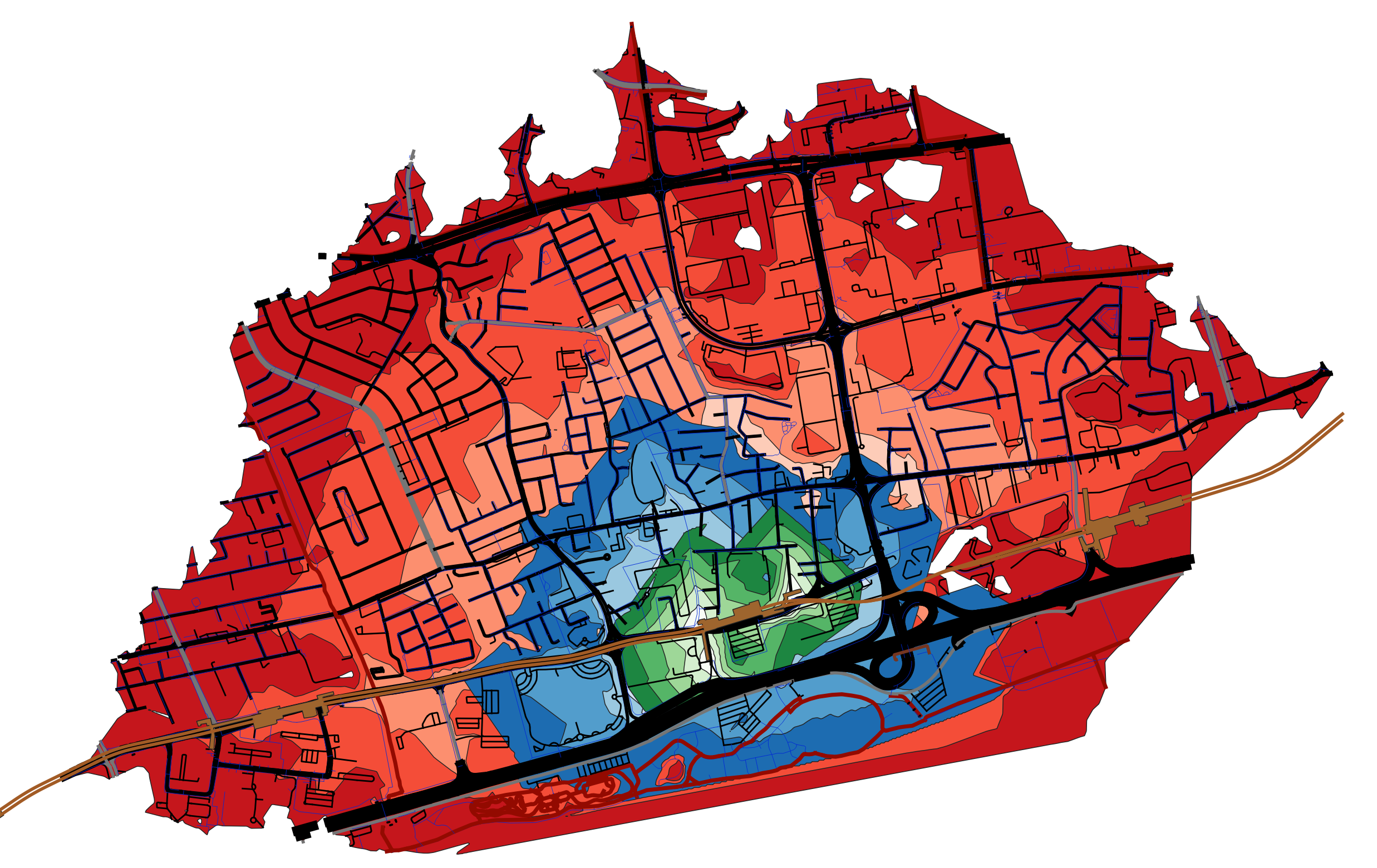
Using previously collected bus stop data in our work area, we have measured the approximate demand for those areas within a 5 minute journey on foot and cycling - specifically, on dedicated bike routes like park connectors and shared roads like primary roads.
We have split our analyses into 3 parts: Walking, Beginner Cycling, and Advanced Cycling.
| Analysis Type | Road Type(s) | Speed (km/h) |
| Walk | Footways, Steps, Residential, etc. | 4 |
| Cycling (Beginner) | Cycleway, Living Street, etc. | 10 - 25 |
| Cycling (Advanced) | Primary, Secondary | 30 |
We have created four charts below to illustrate the impact that cycling has on accessibility to these MRT stations based on our analysis.
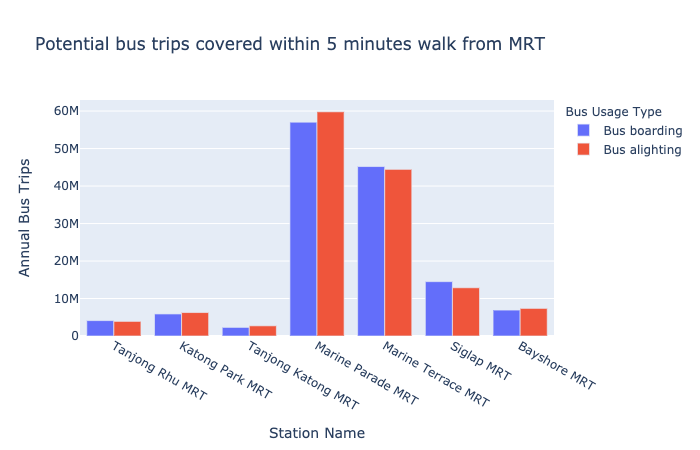
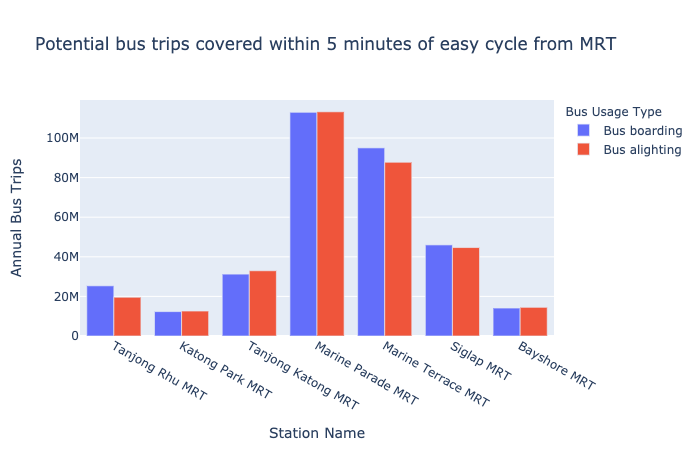
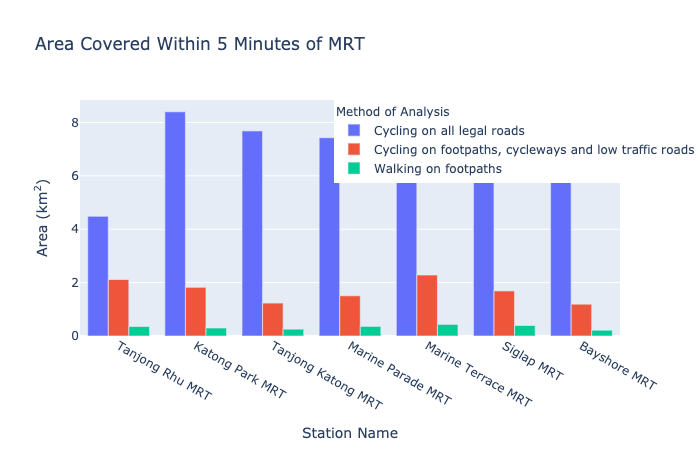
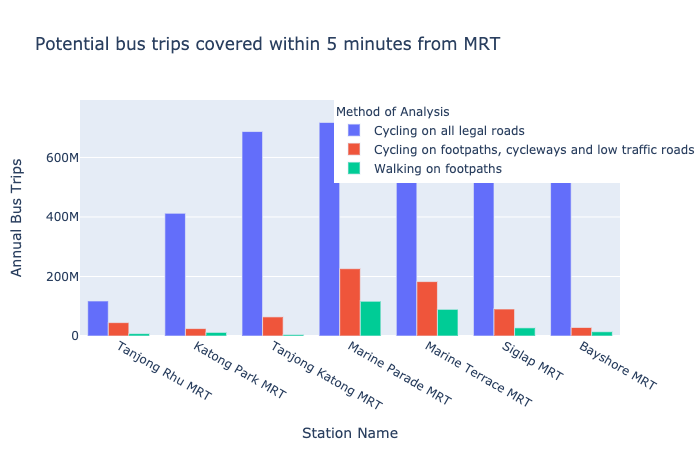
In the charts above, we can observe that most of the stations in our work area have at least twice as much demand for cycling than just walking. We can also see the significant differences in the demand between dedicated cycling routes and cycling on shared roads, from about 3 times to more than 10 times, depending on the station.
One thing to note is the concentration of bus trips within the Marine Parade MRT area. This may be due to the overlap of bus stops between the Tanjong Katong and Marine Terrace areas as previously mentioned.
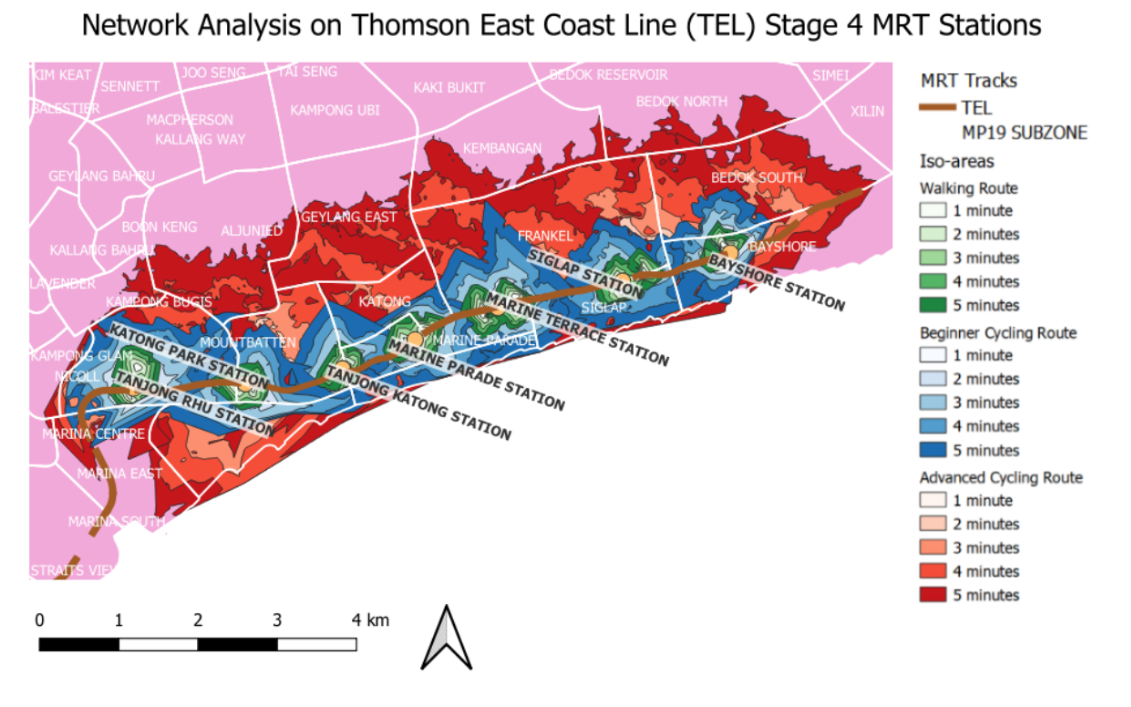
We can also see the difference between the areas covered by the extended journeys using cycling, which increases significantly - from 10 times to more than 20 times.
Through our research and analysis, we have discovered the increased value and accessibility of the Thomson East Coast Line (TEL) by using cycling routes. In line with the goals and provisions by the government for greater access to public transport and active mobility as previously mentioned, the development of biking infrastructure such as dedicated bike lanes and accessible bike parks can enable commuters to safely cycle more in their day-to-day commutes.
Produced maps
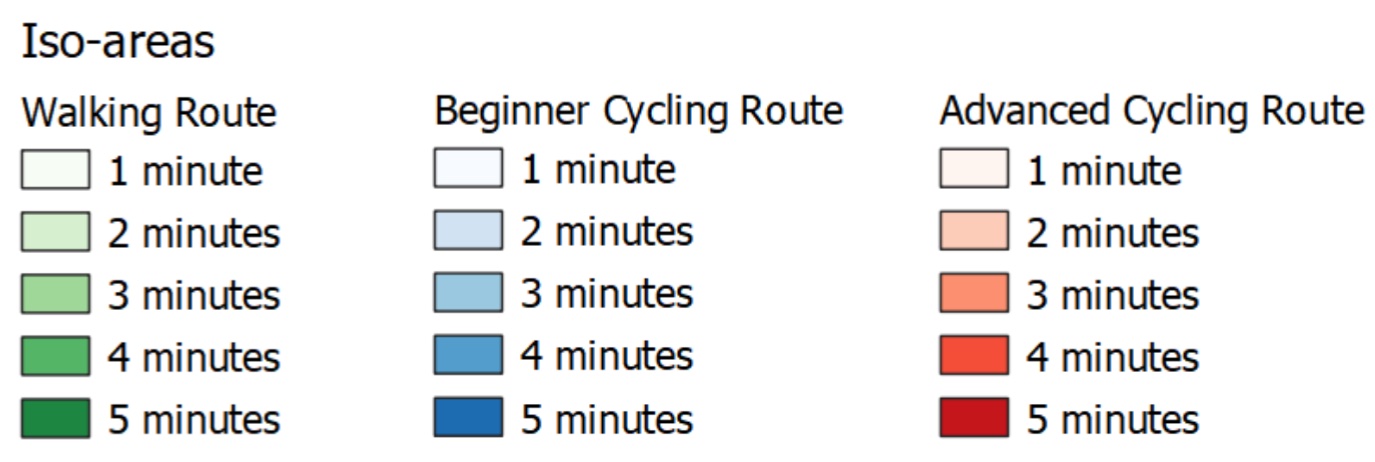
Legend
Tanjong Rhu Station
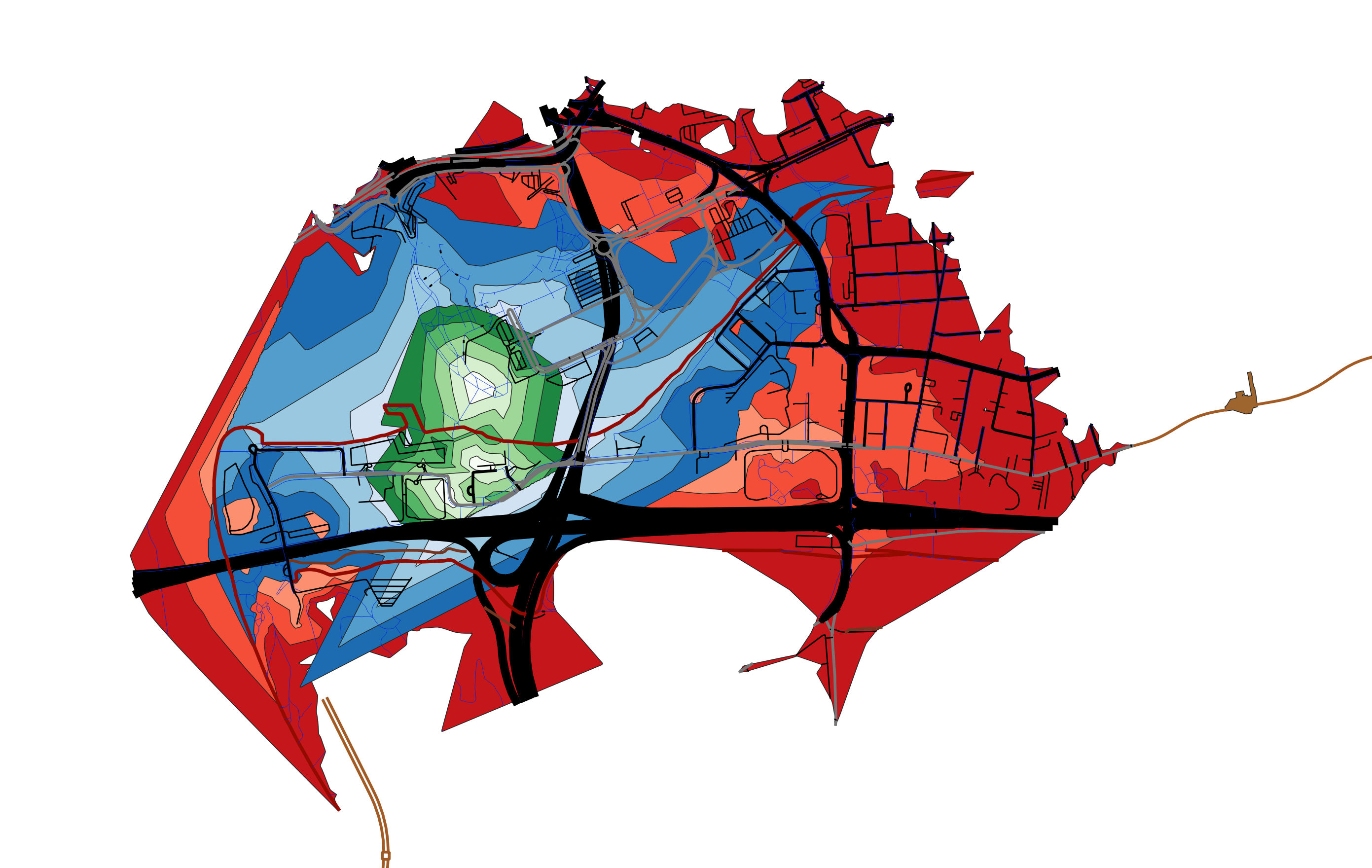
Katong Park Station
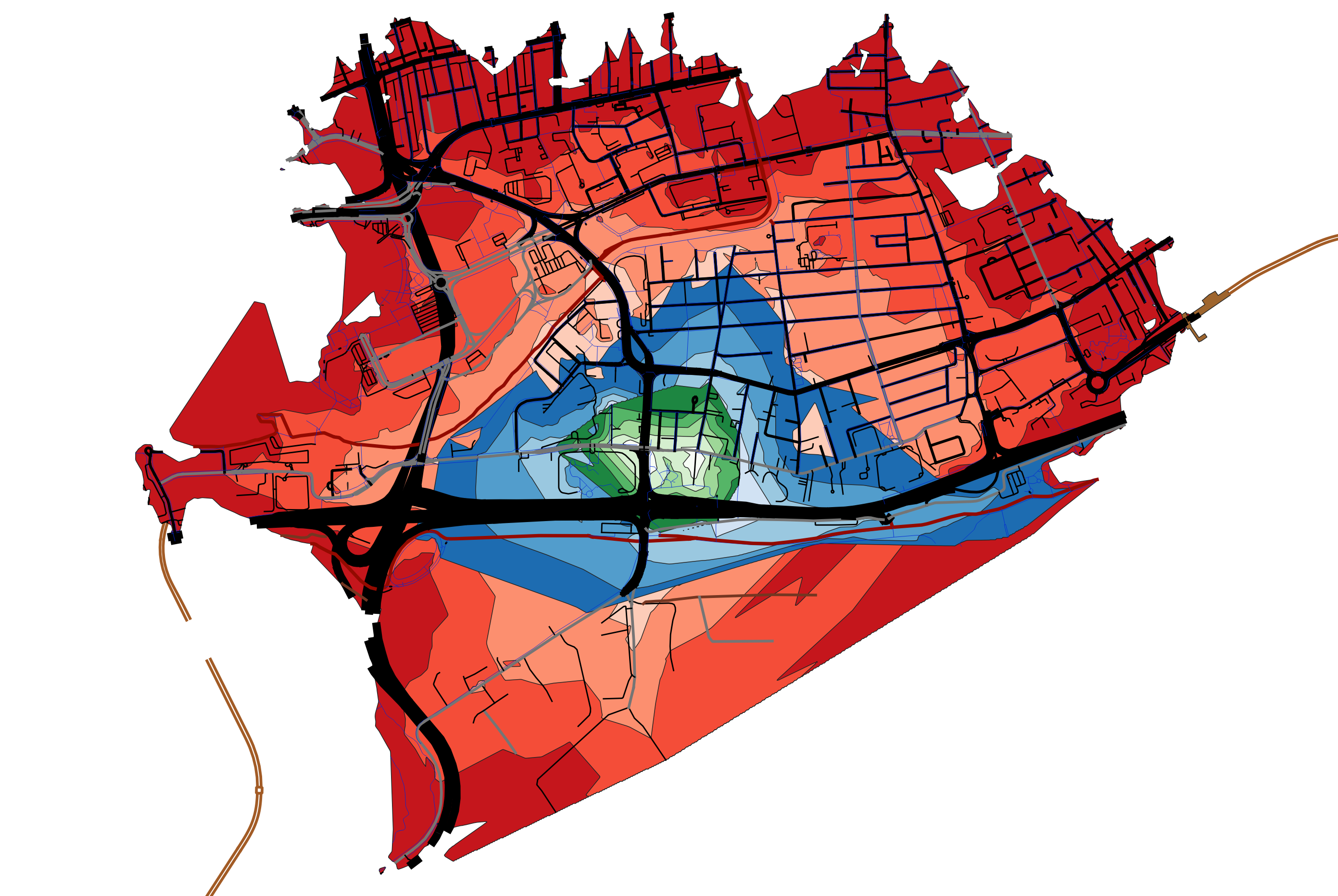
Tanjong Katong Station
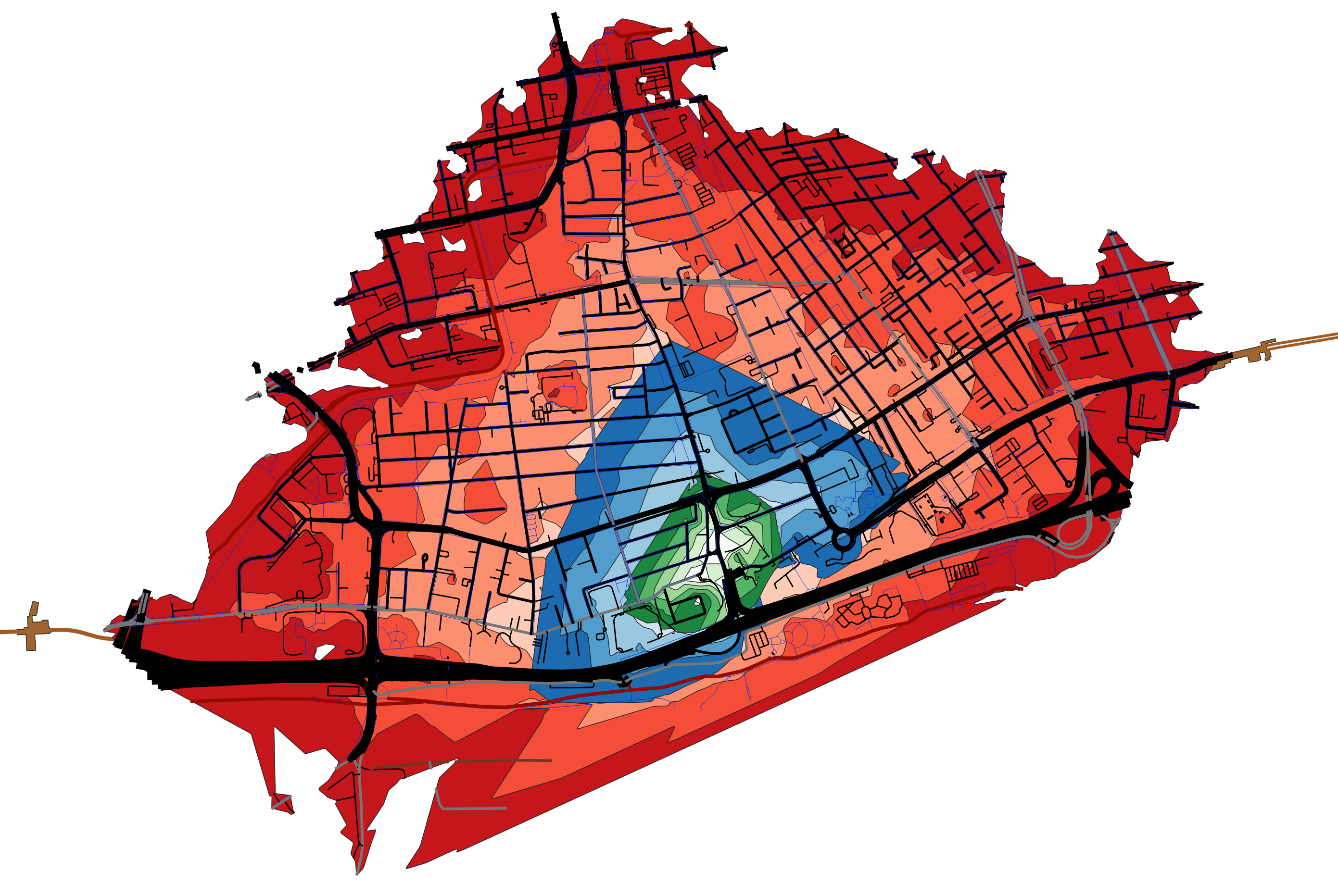
Marine Parade Station
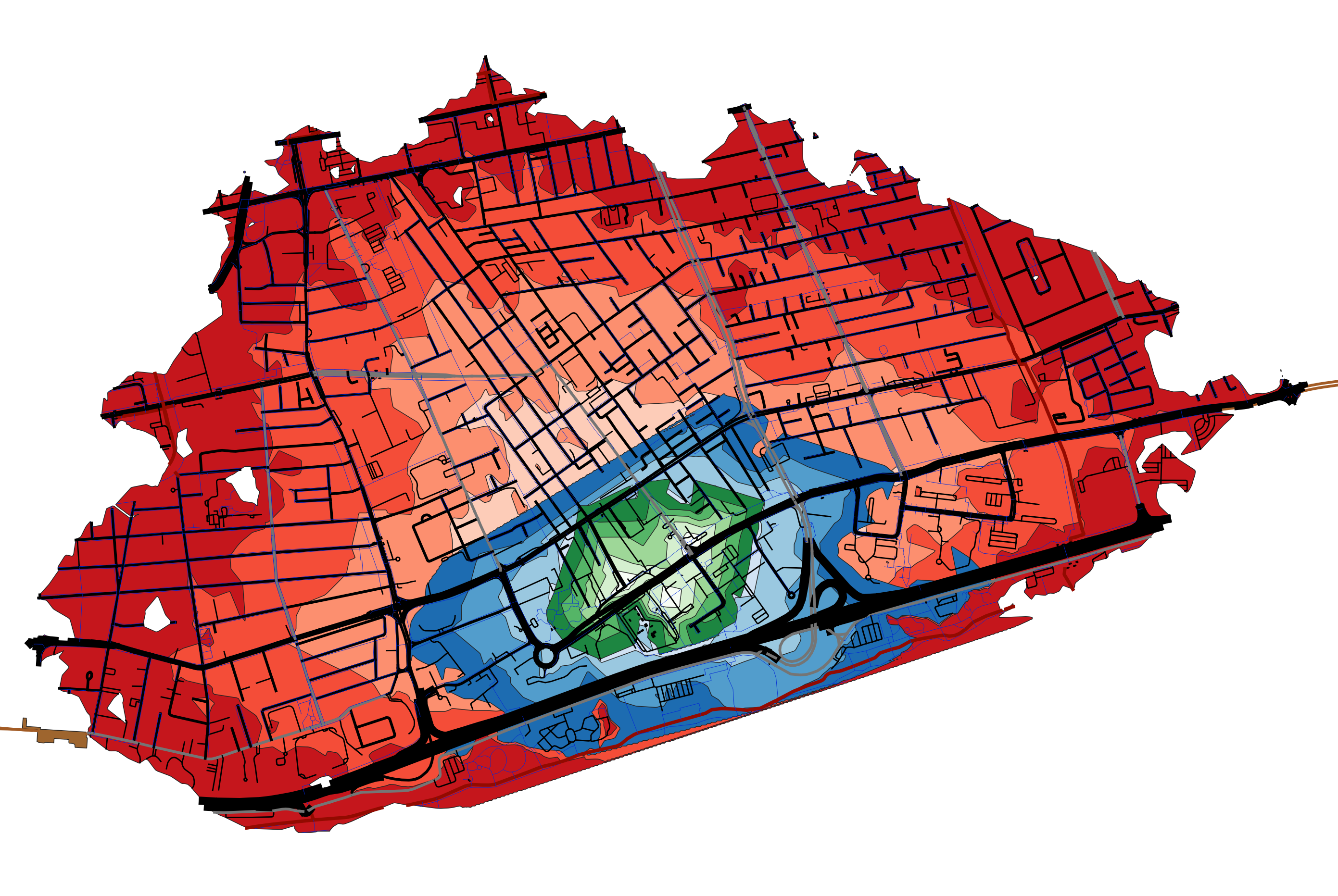
Marine Terrace Station
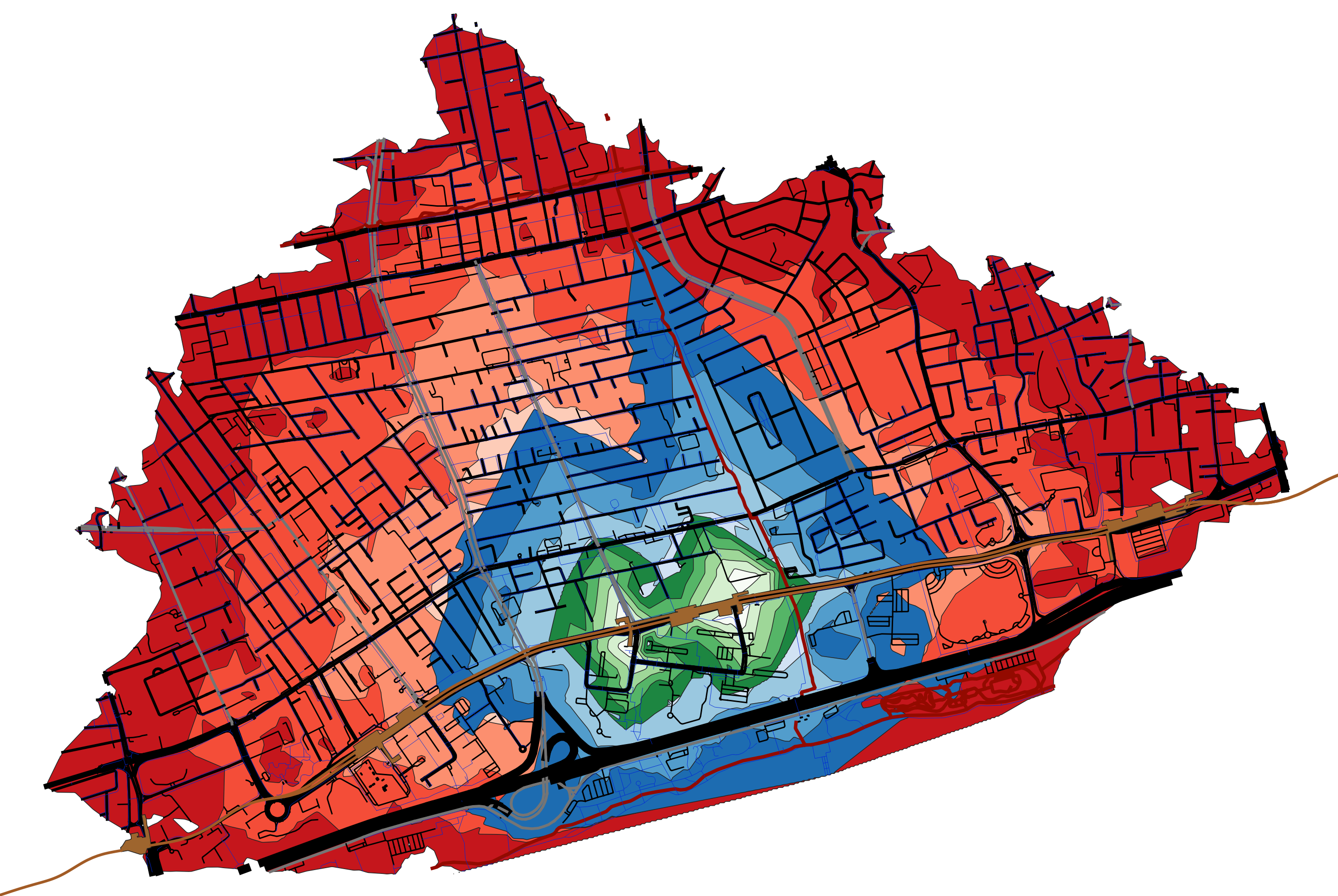
Siglap Station
Bayshore Station